French roast is one of the darkest coffee roasts you can buy, prized for its smoky, low-acid, bold flavor that hits you straight on. If you want a cup that doesn’t mess around with subtle fruit notes or floral undertones, French roast delivers exactly what it promises: intense, rich, and unapologetically dark.
Quick Facts
- French roast refers to a roast level (not a bean origin) where beans reach the second crack at temperatures between 440–464°F, producing oily, near charcoal hue beans with a glossy surface
- The flavor profile features heavy body, dark chocolate notes, smoky depth, and minimal acidity—often with a slight char that distinguishes it from lighter roasts
- Caffeine content is slightly lower by weight than medium roast or light roasts, but the difference in a typical cup is modest
- French roast works especially well for espresso, French press, moka pot, cold brew, and strong drip coffee
- For coffee lovers seeking a straightforward, bold cup, French roast offers an intense experience that cuts through the noise
What Is French Roast Coffee?
French roast coffee is a very dark roast level where coffee beans are taken well into or just past the second crack, turning deep brown with an oily sheen that’s visible to the naked eye. When you pick up whole bean French roast, you’ll notice the beans look almost black with a glossy surface from oils that have migrated out during the intense roasting process.
Here’s what’s crucial to understand: “French roast” refers only to the roasting method—not the bean origin, grind size, or brew method. You can have French roast beans from Colombia, Brazil, Ethiopia, or anywhere else. What makes it French roast is purely how long and hot those green beans were roasted.
On the roast spectrum, French roast sits at the very dark end:
Roast Level | Appearance | Key Characteristics |
|---|---|---|
Light Roast | Light brown, dry | Bright acidity, origin flavors |
Medium Roast | Medium brown, slight oil | Balanced sweetness, moderate body |
Dark Roast | Dark brown, some oil | Lower acidity, roast-forward flavor |
French Roast | Near-black, very oily | Smoky, bold, minimal origin character |
Italian Roast | Black, extremely oily | Heavy char, intense bitterness |
By the time beans reach French roast levels, most origin-specific flavors are muted. What you taste is mainly the roast character—smoke, caramelization, and that distinctive charred edge. Many roasters intentionally push beans to this level because it creates a consistent, bold profile regardless of where the beans originated.
History and Origin of the French Roast Style
The term “French roast” didn’t originate from a specific French invention—it emerged from 19th-century European coffee culture where very dark roasts became popular across France under names like “café noir” and “café brûlé” (burnt coffee). These weren’t insults; they were descriptors for a style that Parisians and other Europeans genuinely preferred.
The “French roast” label spread widely in the late 1800s and early 1900s as roasters in the United States and Western Europe marketed extra-dark coffees to customers seeking that continental roast character. France was part of a broader Southern and Western European tradition of dark roasting that included Italy, Spain, and Portugal, each developing their own variations on the theme.
In Paris and other major cities, this style became associated with strong, straightforward café coffee. The dark french roast you’d get at a Parisian café was meant to be sipped slowly, often with sugar, and it represented what many people today still picture as “classic European dark coffee.”
Modern specialty roasters have refined the approach considerably. Where historic French roasts sometimes crossed into near-burnt territory, today’s carefully controlled dark roasts aim for smoke and dark chocolate notes without tipping into pure charcoal bitterness. The best freshly roasted beans in this style balance intensity with drinkability.
How Is French Roast Coffee Made?
The roasting process for French roast pushes beans further than most other roasts dare to go. Here’s how it works:
Green beans enter a drum or hot-air roaster where heat transforms them through a series of chemical reactions. For French roast, roasters typically target an internal temperature between 440–464°F (227–240°C), with some commercial French roasts pushed closer to 480°F (249°C). The whole process takes roughly 12–15 minutes depending on roaster type and batch size.
Understanding the “crack” stages helps explain what makes French roast distinct:
- First crack (around 380–400°F): Beans expand and make an audible cracking sound as moisture escapes. Most medium roast coffees stop shortly after this point.
- Second crack (around 435–450°F): Cell walls break down further, creating a quieter crackling sound. Oils begin to release and migrate to the surface.
- French roast territory (450–480°F): The intense roasting process continues past the second crack. Cell walls rupture extensively, and oils coat the bean surface, creating that characteristic glossy appearance.
Many roasters choose dense, high-quality Arabica beans for French roast, often from Colombia, Central America (at elevations of 1,000–2,000 meters), or East Africa. These beans hold up better to intense heat without tasting flat or hollow.
After roasting, the rest period matters: French roast beans typically need 12–48 hours to degas before grinding and brewing. This lets excess CO₂ escape and allows flavors to stabilize.
What Does French Roast Coffee Taste Like?
The french roast coffee taste hits you with heavy, bold, smoky notes that don’t apologize for their intensity. Think dark chocolate with a hint of smoke, burnt caramel, toasted nuts, and sometimes a slightly ashy edge.
Here’s what to expect in the cup:
Body and mouthfeel: Full-bodied and coating, with a creamy or syrupy texture when brewed strongly. The oils that release during roasting contribute to this rich mouthfeel without creating harsh bitterness when done right.
Acidity: Very low. French roast is smooth on the palate because many organic acids break down during the extended roasting. If you have a sensitive stomach or find lighter roasts too bright, French roast can be a delicious alternative.
Bitterness: Yes, it’s there. But well-executed French roast balances bitterness with sweetness and smokiness. The Maillard reactions that occur during roasting caramelize sugars, creating notes of caramelized sugar that offset the charred edge.
Common flavor notes:
- Dark chocolate
- Smoky, woody depth
- Toasted almonds
- Burnt caramel
- Slight char or tobacco
Adding milk, plant-based creamers, or a small pinch of salt can soften the charred edge and accentuate the chocolate and caramel notes. Many baristas recommend French roast specifically for milk-based drinks because its bold flavor cuts through dairy without disappearing.
French Roast vs. Other Roast Levels
Roast level fundamentally changes what ends up in your cup. Here’s how French roast coffee compare stacks up against other roasts:
French Roast vs. Light Roast
Light roasts preserve origin characteristics—the fruity, floral, or wine-like notes that come from where the coffee was grown. They’re more acidic, have a lighter body, and contain slightly more caffeine per bean mass. French roast is essentially the opposite: roast-forward flavor, low acidity, full body, and muted origin character.
French Roast vs. Medium Roast
Medium roast offers balance. You get some origin flavors mixed with roast sweetness, moderate body, and approachable acidity. French roast sacrifices that balance for intensity—you’re tasting the roast itself, not the terroir.
French Roast vs. Dark Roast
This is where it gets nuanced. “Dark roast” is a broad category, and French roast sits at the darker end of it. A typical dark roast (like Full City or Vienna) will have some oil on the surface and roasty flavors, but French roast pushes further—glossier beans, more smoke, fuller body, and amplified boldness.
French Roast vs. Italian/Spanish Roast
Italian and espresso roast profiles often go even darker than French, with heavier char and more pronounced ash notes. These other dark roasts sometimes sacrifice sweetness entirely for raw intensity. French roast, by comparison, typically retains some of that caramelized sweetness.
The caffeine question: Dark roasted coffee like French roast has slightly less caffeine by weight than lighter roasts because extended roasting degrades some caffeine compounds. However, the difference in a typical brewed cup is modest. The caffeine content varies more by bean type (Robusta vs. Arabica) and brewing method than by roast level alone.
Brewing French Roast Coffee at Home
French roast is forgiving and well-suited to people who prefer a strong, straightforward cup. Here’s what works best:
Best Brew Methods for French Roast
Method | Grind Size | Ratio (Coffee:Water) | Notes |
|---|---|---|---|
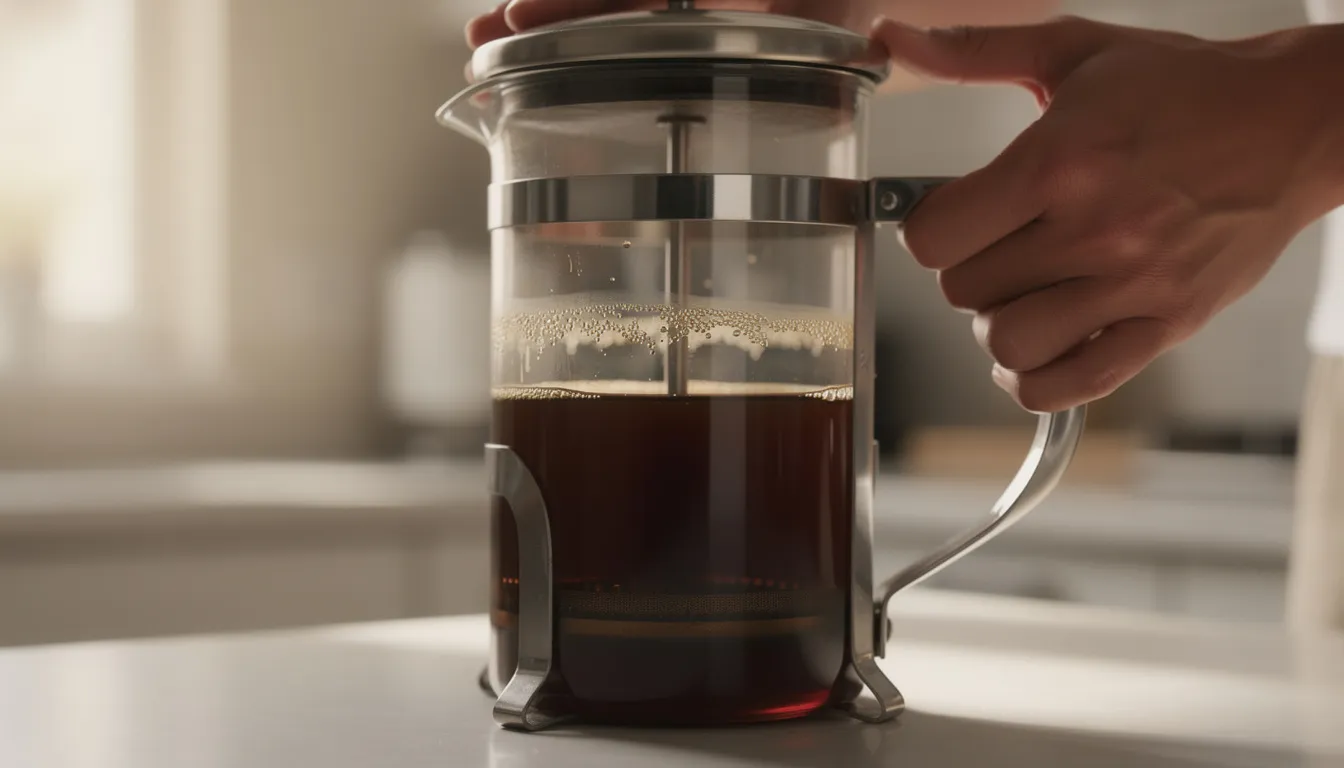
French press | Coarse | 1:15 | Steep 4 minutes, then plunge. Full body, rich oils. |
Espresso | Fine | 1:2 | Excellent crema. Study by Fernando Nunes (1997) showed darker roasts enhance foam volume. |
Moka pot | Fine | Fill basket | Intense, concentrated. Perfect for bold flavor lovers. |
Cold brew | Coarse | 1:8 | Steep 12–18 hours. Smooth, low bitterness, chocolatey. |
Drip coffee maker | Medium | 1:16 | Convenient, consistent. Aim for two tablespoons per 6 oz water as a starting point. |
Pour over | Medium-fine | 1:16 | Can work, but may emphasize bitterness. |
Tips to Avoid Excessive Bitterness
- Use water around 195–200°F (90–93°C)—slightly cooler than boiling
- Don’t over-extract; stick to recommended brew times
- Adjust grind coarser if the cup tastes burnt and harsh
- Opt for freshly ground beans within 2–4 weeks of roast date
Pre-weighing portions or using a consistent scoop standard can streamline the process. You don’t need fancy equipment—just decent beans and a method that fits your schedule.
Is French Roast “Strong”? Caffeine, Acidity, and Bitterness
Let’s clear up a common confusion: “strong” can mean flavor intensity or caffeine level, and these are not the same thing.
Flavor strength: French roast coffee strong in taste? Absolutely. The smoky, robust, bold flavor profile creates a perception of strength that lighter roasts don’t match. When someone says they want “strong coffee,” they often mean they want something that tastes intense—and French roast delivers.
Caffeine reality: Despite its bold taste, French roast typically contains slightly less caffeine per gram than lighter roasts. The extended roasting degrades some caffeine compounds. A standard 8 oz (240 ml) cup of French roast brewed at normal strength typically delivers roughly 70–120 mg of caffeine, depending on beans and method. That’s comparable to—or slightly less than—the same volume of light roast.
Acidity breakdown: French roast is notably low in perceived acidity. The high heat and prolonged roasting break acids down into less impactful compounds. This makes the cup smoother on the palate but shifts the flavor profile toward bitterness rather than brightness.
Managing bitterness: The complex flavor of French roast includes pronounced bitterness from deep caramelization. If you find it too intense:
- Grind coarser to reduce extraction
- Shorten brew time
- Use slightly cooler water
- Add milk or a small pinch of salt to balance
If you dislike bitterness, you may prefer a medium roast or a classic french roast blend with higher-quality beans that retain some sweetness.
How to Choose a Good French Roast Coffee
Bean quality and roast freshness matter as much as roast level—especially for such an intense style. Here’s what to look for:
Check the roast date: Look for roast dates rather than just “best by” dates. Aim for french roast coffee beans roasted within the last 2–4 weeks. Stale dark roast tastes flat and overly ashy.
Prioritize reputable origins: Beans from Colombia, Brazil, Central America, and East Africa tend to produce dense beans that hold up well to dark roasting. High-altitude Central American beans (1,000–2,000 meters elevation) often retain subtle complexity even after intense roasting.
Choose Arabica: 100% Arabica beans typically offer more nuanced sweetness and lower bitterness than Robusta. Unless you specifically want an extremely heavy, robust profile, stick with Arabica.
Buy whole bean: French roast beans ground fresh before brewing preserve aromas significantly better than pre-ground options. Invest in a simple burr grinder to enjoy the freshest cup.
Read the package clues:
- “Smoky,” “dark chocolate,” “caramelized” → Classic French roast profile
- “Extra dark,” “black roast,” “Spanish roast” → Even more charred, possibly too intense
- “Balanced,” “crafted,” “origin notes” → May indicate careful roasting rather than burnt beans
Frequently Asked Questions about French Roast Coffee
Is French roast coffee always burnt?
Not when it’s done right. While some mass-market French roasts taste overly burnt, well-crafted versions aim for deep smokiness and dark chocolate notes without crossing into pure charcoal. The difference comes down to bean quality, roaster skill, and freshness.
If your French roast tastes ashy and unpleasant, it may be over-roasted (pushed too far past second crack), stale (more than 4–6 weeks old), or over-extracted during brewing (too fine a grind, too long a brew time). A quality French roast from a reputable roaster, brewed properly, should taste bold and intense but still balanced and drinkable.
Does French roast coffee have more caffeine than other roasts?
No, French roast does not inherently have more caffeine than lighter roasts. In fact, the extended roasting slightly reduces caffeine content per gram of beans. The perception of “strength” comes from flavor intensity, not caffeine.
A typical 8 oz (240 ml) cup of French roast brewed at standard strength often contains roughly 70–120 mg of caffeine, depending on the specific beans and brewing method. Brew ratio, grind size, and method (espresso vs drip vs cold brew) have more impact on caffeine per cup than roast level alone.
Is French roast suitable for cold brew?
Absolutely. French roast works very well for cold brew, producing a smooth, chocolatey, and less acidic concentrate with subtle smokiness. The extended cold extraction (typically 12–18 hours in the fridge) mellows the bitter edge that can appear in hot brewing.
Use a coarse grind and don’t rush the steep. Cold brew made from French roast pairs well with milk, plant-based creamers, or flavored syrups, making it a solid option for warm weather or anytime you want a refreshing but bold coffee.
Can I use French roast in a standard drip coffee maker?
Yes, French roast works perfectly in most home drip coffee machines. Use a medium grind and start with a brew ratio around 1:15–1:17 by weight (or roughly two tablespoons per 6 oz of water if measuring by volume).
If the coffee tastes too bitter, grind coarser or use slightly less coffee. If it tastes weak or watery, grind a bit finer or increase the dose. Drip brewing is one of the most convenient methods for consistent, daily French roast.
How should I store French roast beans to keep them fresh?
Keep beans in an opaque, airtight container at room temperature, away from light, heat, and moisture. Avoid storing them in the refrigerator or freezer for daily use. Temperature fluctuations cause condensation that degrades quality.
Pre-ground French roast stales faster than whole bean because more surface area is exposed to oxygen. If possible, buy whole bean and grind just before brewing. Use beans within 2–4 weeks of the roast date for best flavor, especially for strongly aromatic dark roasts like French roast that depend on oil and aroma for their characteristic taste.