
Short answer: don’t!
But if you have to, here’s what you can do.
Proper ground coffee storage determines whether your morning cup delivers rich, complex flavor or flat, stale disappointment. For coffee lovers here in Brownsburg, Indiana, understanding how to store ground coffee correctly means adapting to our region’s humid summers and dry winters while protecting those precious flavor compounds.
This guide covers storage methods, container selection, environmental factors, and timing considerations specifically for ground coffee. We’re addressing daily coffee drinkers and enthusiasts who want to preserve the quality of their pre ground coffee purchases—whether you’re brewing a quick cup before work or savoring a better brew on weekend mornings.
The direct answer: Store ground coffee in an airtight container in a dark and cool location, away from heat, moisture, and air. Expect maximum freshness for one or two weeks when stored correctly.
By the end of this guide, you’ll understand:
- Why ground coffee loses flavor faster than whole bean coffee
- How Brownsburg’s climate affects your coffee storage strategy
- Which container materials best preserve coffee fresh
- The truth about freezer and fridge storage
- Practical purchasing habits that reduce waste
Understanding Coffee Freshness and Degradation
Fresh ground coffee means grounds that retain their original aromatic oils, volatile compounds, and balanced acidity. The elements that create that satisfying cup experience. Once coffee beans are ground, the clock starts ticking rapidly on flavor quality.
The science behind this degradation centers on oxidation. When roasted coffee encounters oxygen, chemical reactions break down the lipids and chlorogenic acids responsible for taste and aroma. Ground coffee has dramatically more surface area exposed to air than whole coffee beans, accelerating this process from weeks to mere days.
The Four Enemies of Fresh Ground Coffee
Air and oxidation represent the primary threat to your ground coffee fresh quality. Oxygen molecules bind to flavor compounds almost immediately after grinding, with studies showing 50-70% of aroma volatiles disappear within 24-48 hours of air exposure at room temperature.
Light and UV damage break down the phenolic compounds in coffee oils. Direct sunlight or even strong afternoon sun through kitchen windows can reduce cup quality by 20-30% within a week. This photodegradation happens faster than most coffee lovers realize.
Heat accelerates every staling process in coffee. Temperatures above 80°F cause volatile flavor compounds to escape at double the normal rate. That convenient spot near your stove? It’s actively ruining your coffee with each 100-200°F heat spike during cooking.
Moisture causes mold growth and off-flavors when humidity exceeds 65%. Coffee grounds absorb water from humid air, promoting bacterial growth and creating clumping that leads to uneven extraction when you brew.
Ground Coffee vs Whole Bean Freshness
Ground coffee loses freshness dramatically faster than whole beans due to one factor: surface area. When you grind coffee beans, you multiply the surface exposed to oxygen by hundreds of times, giving those destructive reactions vastly more territory to attack.
Whole coffee beans retain freshness for 2-4 weeks under optimal conditions because their intact structure protects internal oils and compounds. Pre ground coffee, by contrast, begins significant degradation within hours and reaches “stale” status (below 50% flavor retention) by day 30—often sooner.
The practical shelf life difference is stark: whole bean coffee stays at peak quality for roughly 4-6 weeks post-roasting, while ground coffee peaks between 7-14 days and declines noticeably after that. This timeline shapes every storage decision you’ll make.
Optimal Storage Conditions for Brownsburg Climate
Understanding environmental threats to coffee freshness leads directly to practical location decisions in your home. Brownsburg’s Midwest climate presents specific challenges that require thoughtful storage placement.
Temperature Control
The ideal temperature range for coffee storage sits between 59-75°F (15-24°C), with 60°F representing optimal conditions. Ground coffee stored above 80°F experiences accelerated volatile loss, while extreme cold introduces other complications.
Brownsburg’s seasonal swings—from winter lows of 15-35°F to summer highs exceeding 90°F—mean your kitchen counter experiences significant temperature fluctuation throughout the year. Areas near exterior walls, windows, or appliances face the most dramatic changes.
For consistent cool location storage, choose interior pantries or cabinets away from the stove, dishwasher, and south-facing windows. Basements often maintain the most stable temperatures year-round, making them excellent candidates if you have dry storage space available.
Humidity Management
Indiana humidity levels swing from 70-80% relative humidity in summer months to 20-30% during winter. Both extremes create storage challenges for ground coffee.
Summer’s high humidity causes grounds to absorb ambient moisture, promoting clumping and potential mold growth above 65% RH. This moisture absorption also accelerates flavor degradation and can add 10-20% to the weight of improperly stored coffee grounds.
Winter’s dry air creates static electricity issues, causing grounds to cling unevenly to container walls and experience inconsistent air exposure. Consider adding silica gel packets to your storage container during humid months to reduce moisture risk by up to 50%.
Basement storage works well if your basement stays dry, but avoid damp basements entirely. Standard pantry storage beats kitchen counter placement in most Brownsburg homes due to better humidity stability away from cooking steam and dishwasher moisture.
Light Protection
Any dark place outperforms lit storage areas for coffee preservation. UV light catalyzes the breakdown of coffee’s phenolic compounds, directly attacking the oils responsible for flavor complexity.
In typical home layouts, interior pantries, closed cabinets, and drawer storage all provide adequate light protection. Avoid windowsills, open shelving near windows, and clear canisters placed where afternoon light reaches them.
Even artificial lighting contributes to degradation over time. If your coffee container sits in a frequently-lit area, opaque materials become essential rather than optional for maintaining freshness longer.
Storage Container Types and Methods
Environmental control leads naturally to container selection—the physical barrier between your ground coffee and the elements trying to destroy it.
Container Selection Process
- Choose airtight seal mechanism — Look for silicone gaskets, rubber seals, or clamp-style closures that create genuine pressure differentials. Simple screw-top lids rarely achieve true airtight status.
- Select non-reactive materials — Glass, ceramic containers, and stainless steel won’t impart flavors or react chemically with coffee oils. Some plastics can transfer tastes over time.
- Determine appropriate size — Match container capacity to your weekly consumption. Excess air space in large containers accelerates oxidation. Smaller batches in appropriately-sized containers preserve quality better.
- Consider opacity requirements — Opaque or dark-tinted materials protect against light damage. If you prefer seeing your coffee, store clear canisters inside a closed cabinet.
- Evaluate ease of daily use — The best container for ground coffee is one you’ll actually use consistently. Complex vacuum systems lose value if you skip the sealing step when rushed.
Container Material Comparison
Criterion | Glass | Ceramic | Stainless Steel | Plastic |
|---|---|---|---|---|
Airtightness | Excellent with gasket | Excellent with gasket | Excellent with gasket | Variable |
Light Protection | Dark-tinted only | Excellent | Excellent | Opaque only |
Odor Resistance | Excellent | Excellent | Excellent | Poor over time |
Durability | Fragile (avoid below 32°F) | Moderate | Excellent | Good |
Cost | $5-20 | $15-40 | $25-60 | $5-15 |
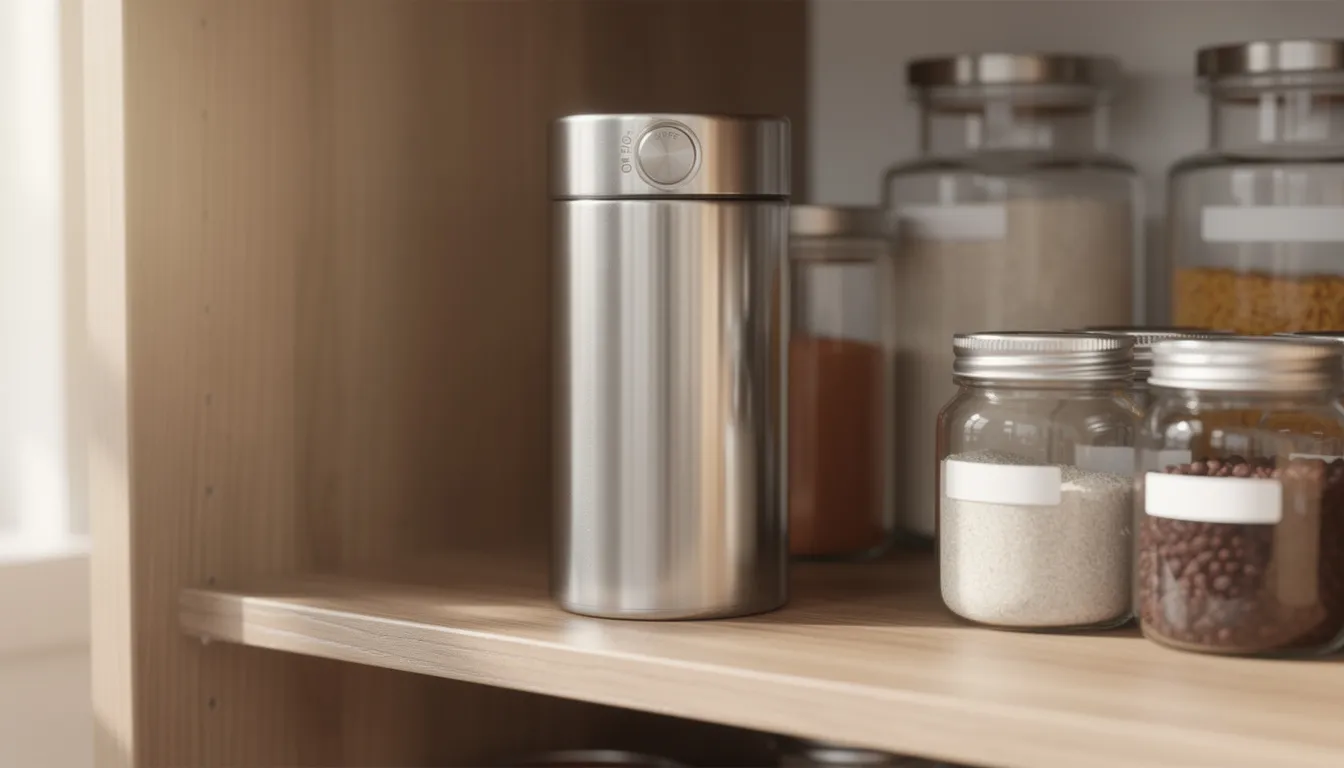
For most Brownsburg coffee lovers, dark-tinted glass jars with clamp lids offer the best balance of protection and value. Ceramic containers provide excellent performance but at higher cost. Stainless steel options like Fellow Atmos handle temperature swings better—relevant if garage or basement storage appeals to you.
Avoid storing ground coffee in its original open bag beyond a few days. Factory packaging with a one way valve protects freshly roasted coffee during shipping but lacks the airtight seal needed for home storage once opened.
Vacuum Sealing and Advanced Storage
Vacuum sealed containers remove 90-100% of air from the storage environment, reducing oxidation by approximately 80%. This makes them ideal for long term storage or infrequent brewing schedules.
Hand-pump vacuum systems like Atmos-style containers extend usable freshness to 4-6 weeks but require re-vacuuming after each opening. For daily use, containers with CO2 valves (like Airscape) offer a practical middle ground—they vent degassing from freshly roasted coffee while blocking oxygen ingress.
For bulk purchases, divide ground coffee into weekly portions before vacuum sealing. Store in a vacuum sealed bag within a freezer bag for long periods in frozen storage, then thaw at room temperature for 45 minutes before opening to prevent condensation.
Common Storage Mistakes and Solutions
Even well-intentioned coffee storage goes wrong when common myths guide decisions. These mistakes cost both flavor quality and money through wasted coffee.
Storing in Original Packaging Too Long
Factory coffee bags—even those with one way valves—aren’t designed for extended home storage. Once you break the seal, air infiltrates continuously through the bag material itself, which often has oxygen transmission rates 50 times higher than glass or ceramic.
Transfer opened coffee to an airtight container immediately after purchase. If you must use the original bag temporarily, squeeze out excess air before sealing with a clip, but treat this as a 3-5 day solution maximum.
Freezer and Refrigerator Storage Errors
The fridge presents multiple problems for ground coffee. Temperature fluctuations near the door (5-10°F swings), high humidity causing condensation, and proximity to other foods with strong odors all damage coffee quality. Ground coffee absorbs surrounding flavors 2-3 times faster than whole beans due to its porous structure.
If you must freeze ground coffee for long term storage, use proper technique: divide into weekly portions, vacuum seal or double-bag, store at 0°F or below, and never refreeze after thawing. Each freeze-thaw cycle causes 15-25% quality loss from ice crystal damage.
Remove frozen portions 45 minutes before brewing, keeping the bag sealed until grounds reach room temperature. This prevents condensation from forming on cold grounds and introducing moisture.
Cross-Contamination with Strong Odors
Coffee grounds act like odor sponges, absorbing volatile compounds from nearby foods. Storing coffee near onions, garlic, spices, or cheese results in off-flavors that ruin your brew regardless of other storage precautions.
Choose storage locations away from your spice cabinet and strong-smelling foods. Even with airtight containers, kitchen areas with persistent cooking odors pose risks over time.
Buying Too Much Ground Coffee
Perhaps the most common storage mistake isn’t storage at all—it’s purchasing habits. No container can reverse degradation that’s already occurred during weeks of sitting in bulk quantities.
Calculate your weekly coffee consumption and buy beans or ground accordingly. If you drink 2-3 cups daily using 15 grams per cup, a 12-ounce bag lasts roughly one week—the ideal purchase cycle for pre ground coffee.
Bulk savings evaporate when you discard stale coffee or drink subpar cups from grounds past their prime. Many Brownsburg households throw away 20-30% of their coffee yearly simply due to staleness from over-purchasing.
Conclusion and Next Steps
Ground coffee demands more vigilant storage than whole bean coffee due to its vastly increased surface area and accelerated oxidation. The formula is straightforward: keep ground coffee in an airtight container, in a dark and cool location, away from moisture and strong odors, and consume within one or two weeks of grinding or opening.
Take these actions today:
- Assess your current storage setup against the four enemies: air, light, heat, moisture
- Purchase an appropriate airtight container if your current solution falls short
- Establish a consumption timeline based on your daily brewing habits
- Adjust purchase quantities to match realistic freshness windows
For deeper exploration, consider investigating coffee grinding techniques to maximize freshness by grinding just before brewing, or learn to recognize stale coffee signs before they compromise your cup. If you consistently struggle with storage timelines, switching to buy beans whole and grinding fresh may ultimately prove simpler than managing pre ground coffee storage challenges.
Additional Resources
Recommended container options:
- Budget: Dark-tinted mason jars with clamp lids ($5-15)
- Mid-range: Airscape canisters with CO2 valve ($25-35)
- Premium: Fellow Atmos vacuum containers ($30-60)
Freshness testing method: Smell your grounds immediately after opening a fresh bag and note the intensity. Compare this baseline to stored grounds—significant aroma loss indicates degradation requiring faster consumption.
Seasonal adjustments for Indiana:
- Summer (June-August): Add silica gel packets to containers; avoid basement storage in humid basements
- Winter (December-February): Use anti-static bags if grounds cling to containers; check gasket seals for cold-weather brittleness
Track your roast date or purchase date directly on containers. When grounds exceed 14 days from opening, prioritize using them quickly or accept reduced flavor quality. Fresh coffee is always worth the planning.